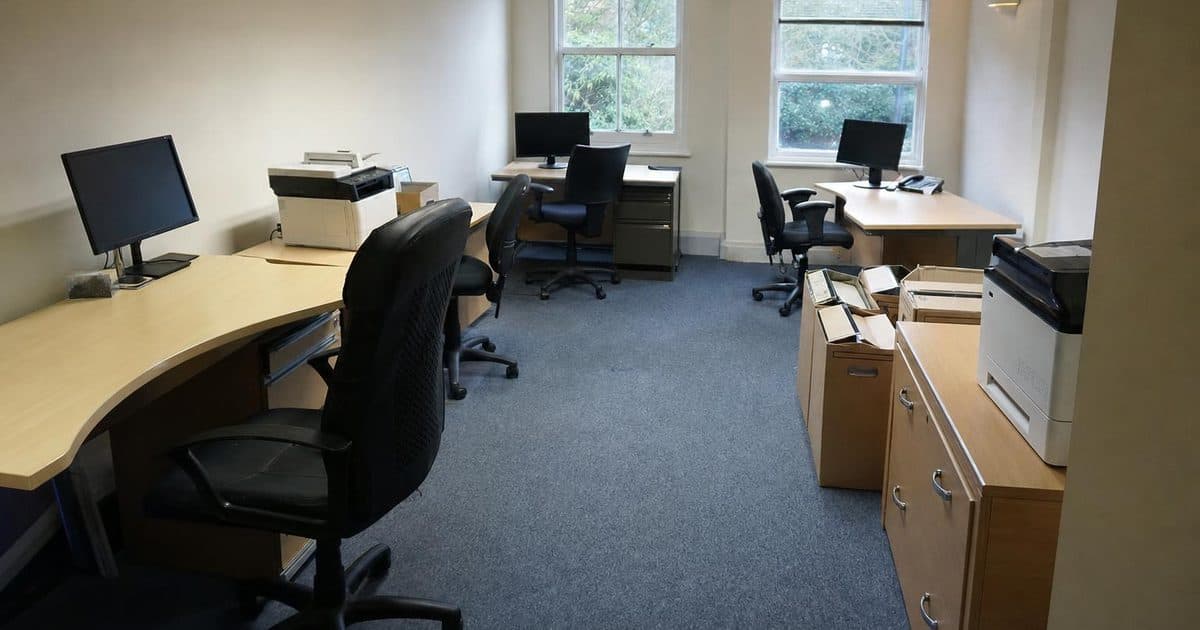
Quick answer
For desks, chairs and general office contents, office clearance is the best fit. If you also need IT equipment removed, include e-waste disposal, and for mixed trade waste use commercial waste removal.
What office clearance covers
Office clearance is the process of removing unwanted items from a workplace in an organised way. In Andover, that can mean a single room, a small office suite, a shared workspace or a full premises that is being handed back, refurbished or reconfigured.
It usually includes furniture, storage units, paperwork, small fixtures and general clutter that has built up over time. It may also involve separating reusable items from waste so the space can be left tidy and ready for the next stage.
If you are clearing a workplace, it helps to think in categories rather than trying to deal with everything at once. That makes it easier to decide what can be reused, what needs to be removed carefully and what should go into the correct disposal stream.
Planning a smooth office clearance
A good office clearance starts with a simple plan. Decide which areas will be cleared, which items should stay in place and what needs to happen before the clearance team arrives. In many Andover offices, the biggest challenge is not the lifting itself but the organisation around it.
It can help to walk through the workspace and make notes about:
- desks, chairs and meeting furniture
- lockers, shelves and filing cabinets
- paper archives and boxed documents
- IT equipment, monitors and accessories
- kitchen items, small appliances and loose clutter
- items that should be kept, moved or removed
Once the list is clear, the job becomes more manageable. You can also decide whether the clearance needs to happen outside working hours, in stages or after staff have finished packing personal belongings.
What to sort before the clearance day
Before the removal begins, separate items that staff still need from items that can go. Label anything that is staying, and make sure drawers, cupboards and desks are checked properly. Forgotten cables, chargers and documents can easily slow the process down later.
If you are managing the site for a landlord, letting agent or facilities team, it is sensible to confirm access routes, lift use, parking and any building rules ahead of time. A little preparation can make the whole clearance feel much less disruptive.
Handling desks, filing and furniture
Office furniture is often the largest part of the job. Desks, tables, chairs and cabinets can take up a lot of space, especially in older offices where storage has built up over several years.
Where possible, decide whether items are being reused elsewhere, donated, recycled or removed as waste. Good planning can reduce the amount of unnecessary disposal and help keep the clearance straightforward.
Filing cabinets and paperwork
Paper files need extra attention because they may contain confidential information. Before removal, check what must be retained, archived or shredded. Anything that is no longer needed should be handled carefully so it does not end up loose during the clearance.
Filing cabinets, ring binders and document boxes are often easiest to move once the contents have been sorted. Empty cabinets are also safer and quicker to carry through corridors and doorways.
Office furniture that can be reused
Some furniture still has useful life left in it. If desks, chairs or storage units are in reasonable condition, it may make sense to move them to another workspace rather than send them straight for disposal. This is especially useful when a business is relocating within Andover or updating part of a building.
If you are also clearing other bulky items, services such as Furniture Removal can help with moving larger pieces safely.
Dealing with IT equipment and waste streams
Modern offices usually contain more than furniture. There are monitors, printers, phones, routers, keyboards, desktop units and cable runs to deal with as well. These items should be separated from general rubbish so they can be handled appropriately.
For redundant electronics, use E Waste Disposal so computer equipment and related items are removed in the right way. This keeps the clearance more organised and avoids mixing different materials together.
| Item type | Best approach |
|---|---|
| Desks, chairs, cabinets | Office clearance |
| Computers, monitors, printers | E waste disposal |
| Mixed bags, packaging and general waste | Commercial waste removal |
If the clearance includes a mix of items from storage rooms, tea points and shared spaces, Commercial Waste Removal can be useful for the non-office-specific waste that does not belong with furniture or electronics.
Keep heavier or awkward items separate from lighter waste where possible. That makes loading easier and helps the clearance move in a steady order rather than becoming a rush at the end.
How an office clearance usually works
Most office clearances follow a simple pattern. First, the space is assessed and the main items are identified. Then the contents are sorted into keep, remove, recycle and waste categories. Finally, the agreed items are taken away and the area is left tidy.
In practical terms, that often means:
- checking access and agreeing what is being removed
- separating furniture, IT equipment and general waste
- clearing larger items first and loose items afterwards
- loading and removing materials safely
- leaving the workspace swept through and ready for its next use
If the office is part of a larger building, it can be helpful to coordinate with other tenants or contractors so corridors, lifts and entrances stay clear. For larger commercial clearances, a simple timetable often works better than trying to do everything in one go.
Making the process easier in Andover
Andover businesses often need clearances for a move, a lease end, a refurbishment or a general workspace update. Whatever the reason, the best results usually come from keeping the job calm and well ordered.
A few practical steps can make a real difference:
- remove personal items before the clearance starts
- label anything that is staying in the building
- back up files and check important documents first
- separate IT equipment from general office waste
- leave clear access to stairs, lifts and loading points
If the office is only part of what needs clearing, you may also find related services useful, such as Rubbish Removal for smaller mixed loads or Commercial Waste Removal for regular business waste that has built up over time.